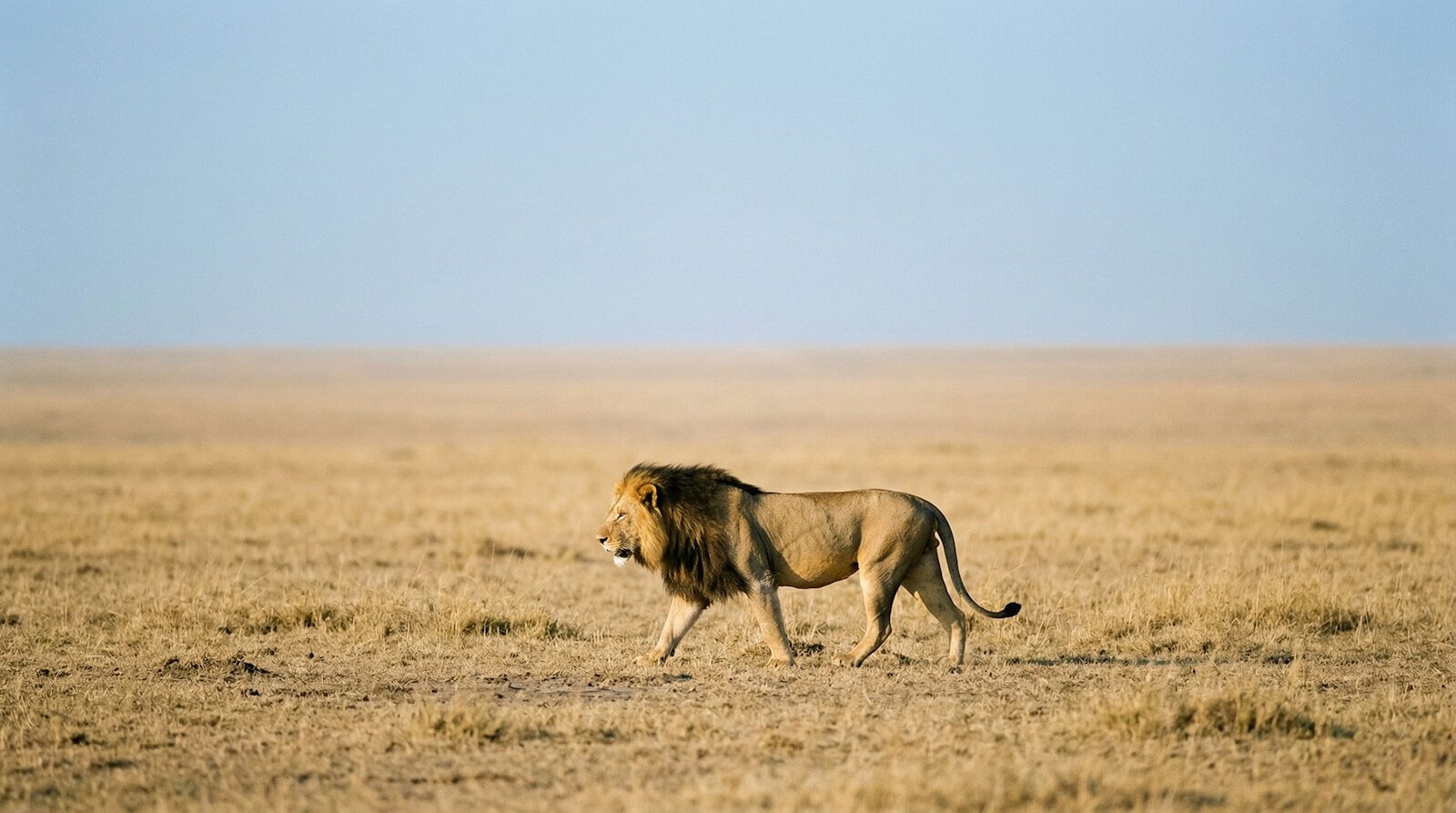
There’s a moment somewhere over the endless golden plains of the Serengeti, as a lion lifts its head from the grass and your breath catches in your throat — when you realize you’re no longer just watching nature. You’re inside it.
That moment is waiting for you. And from the USA, it’s far more reachable than most people think.
Planning a Serengeti safari from America might look like an overwhelming puzzle of transatlantic flights, foreign visa rules, wildlife seasons, and unfamiliar operators. But break it down step by step, and it becomes one of the most thrilling things you’ll ever plan let alone live.
Table of Contents
The logistics are manageable. The payoff is extraordinary. And once you’ve watched the sun rise over the Serengeti plains with the smell of acacia smoke in the air, you’ll wonder why you waited so long.
This guide covers everything an American traveler needs: real costs, the best flights from the US to Tanzania, when to go, how to find the right operator, what to pack, and the insider travel tips that separate a good safari from the trip of a lifetime.
Why the Serengeti Is Worth the Journey from the USA
Before we get into logistics, let’s be clear about what you’re heading toward because the Serengeti is not just another wildlife destination.
Tanzania’s oldest and most celebrated national park spans nearly 15,000 square kilometers of open grassland, ancient rocky kopjes, and riverine forests that have remained virtually unchanged for thousands of years.
Declared a UNESCO World Heritage Site in 1981, the Serengeti protects one of the last truly intact wild ecosystems left on Earth a place where human development ends at the gate and nature resumes full authority over what happens next.
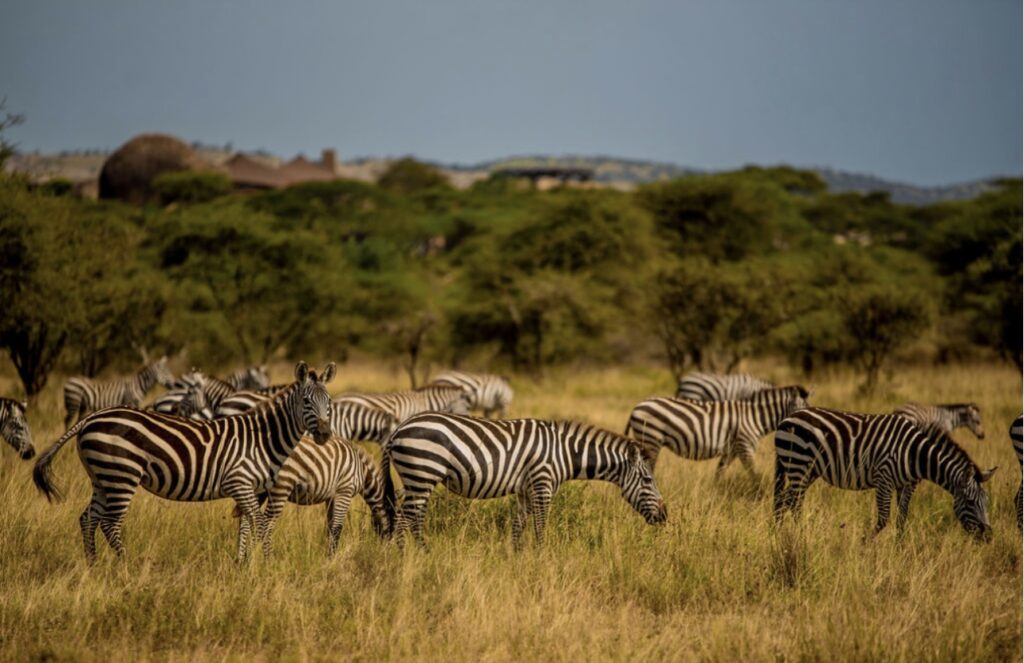
The scale of life here is genuinely difficult to comprehend until you witness it in person. Over 2 million wildebeest roam the plains alongside 4,000 lions, 1,000 leopards, 550 cheetahs, and roughly 500 bird species. This is not a managed reserve where animals are fed or tracked for tourist convenience.
This is raw, self-governing wilderness and that distinction is everything. The drama you witness in the Serengeti is real. The kills, the births, the standoffs at watering holes, the cheetah sprinting at 70 miles per hour across the open plain none of it is staged, and none of it can be fully anticipated, which is precisely what makes it so consuming.
At the center of it all is the Great Wildebeest Migration the largest movement of land mammals on the planet. More than 2.5 million wildebeest, zebras, and gazelles complete a 500-mile annual circuit across the Serengeti and Kenya’s Maasai Mara, following rainfall and fresh grazing in a cycle that has played out for millennia. The river crossings where enormous herds hurl themselves into crocodile-filled waters in a thundering, chaotic surge are among the most raw and powerful spectacles in the natural world. No photograph does it justice. You have to be there.
From the USA, the journey takes between 18 and 24 hours of total travel time. It requires some planning. But for an experience that genuinely changes how you see the world, it is worth every hour.
Best Time to Visit the Serengeti from the USA
Timing your trip is the single most important planning decision you’ll make. The Serengeti is a different place entirely depending on when you arrive the landscape, the wildlife behavior, the crowd levels, and even the price of your lodge all shift dramatically across the seasons. Understanding the calendar isn’t just helpful; it’s the difference between arriving at the right moment and missing the action entirely.
December to March — Calving Season in the Southern Serengeti
The dry season ends and the wildebeest herds descend southward to the lush Ndutu grasslands, drawn by fresh rainfall and new growth. January and February mark the peak of calving season, when thousands of wildebeest calves are born daily onto the open plain and the predators know it.
Cheetahs, lions, leopards, and hyenas converge on the calving grounds with a focus and intensity that produces some of the most electrifying wildlife encounters you’ll ever witness. A cheetah sprinting after a newborn calf. A pride of lions working together at the edge of a herd. These months offer an extraordinary combination of abundance, drama, and green, photogenic landscapes under dramatic skies.
For American travelers, the December-to-March window is also logistically appealing. It corresponds with US holiday breaks and school vacation periods, making it easier to take an extended trip. It’s not the cheapest time of year, but it delivers remarkable value relative to the quality of wildlife viewing.
April to May — Low Season and Genuine Value
The long rains arrive in April and the park becomes noticeably quieter. Lodge prices drop, availability opens up, and the Serengeti transforms into a vivid, saturated green that feels almost unreal against the wide African sky. Large wildebeest herds remain present in the far south, predators are still active, and the roads — while occasionally muddy — remain passable throughout most of the park.
This is the Serengeti’s best-kept secret for budget-conscious travelers. Fewer vehicles in the field means more intimate wildlife encounters, and many lodges offer their best rates of the year. If you have flexibility in your schedule and don’t need the headline-act migration crossings, April and May can deliver a deeply satisfying and surprisingly affordable safari.
June to July — Western Corridor and the Grumeti Crossings
As the dry season reasserts itself, the herds begin pushing northwest through the western corridor toward the Grumeti River — and here is where some of the most spectacular and underappreciated drama of the migration unfolds. The Grumeti River is shallower and narrower than the Mara, but its resident Nile crocodiles are enormous, and the crossings here draw far fewer tourist vehicles than those in the north. June is one of the finest months to visit for travelers who want genuine migration drama without the peak-season crowds and price premiums.
The landscape in June is also beautiful the long rains have ended, the grass is still green enough to feel alive, and the mornings carry a cool, crystalline quality that makes early game drives genuinely magical.
July to October — Peak Season and the Mara River Crossings
This is what most people picture when they imagine the Serengeti. The northern Serengeti around the Mara River becomes the stage for the migration’s most iconic act — enormous columns of wildebeest massing at the riverbanks, the herd surging and hesitating and finally committing, and then thousands of animals plunging into the water in a crashing, roaring chaos as crocodiles launch from the shallows. It is violent, primal, and utterly mesmerizing.
Wildlife density across the park is at its peak. The dry season strips vegetation back, concentrating animals around water sources and making sightings predictably spectacular. Predator activity is high, lion prides are large and active, and the northern Serengeti landscape of rolling hills and granite outcrops looks unlike anywhere else in Africa.
The trade-off is that July through September is the busiest and most expensive period in the Serengeti calendar. Top lodges sell out many months in advance, and popular crossing points can attract multiple vehicles at once. If you plan to travel during peak season, securing your accommodation and flights 5 to 6 months ahead is not just advisable — it’s essential.
November — The Short Rains and the Return South
November is a transitional month that rewards the flexible traveler. The short rains arrive, the herds begin drifting south again, and visitor numbers fall from peak levels. Birdwatching is exceptional as migratory species arrive, the landscape blooms with new color, and lodges offer pleasant rates without the low-season compromises. If your schedule allows it, November is one of the most undervalued months on the Serengeti calendar.
Serengeti Safari Costs from the USA
A Serengeti safari from the United States is a significant financial commitment — and one that deserves clear, honest information. Here is what you should actually expect to spend, and where your money makes the greatest difference.
Flight Costs: USA to Tanzania
There are currently no direct flights from the United States to Tanzania, so you will connect through at least one major international hub. Total travel time from departure to arrival at Kilimanjaro International Airport (JRO) typically falls between 18 and 24 hours depending on your origin city and chosen routing.
Ethiopian Airlines, routing through Addis Ababa, is consistently one of the most competitive options for East Africa and offers good connections from major US cities including New York, Washington, Los Angeles, and Chicago. Kenya Airways via Nairobi is a natural choice if you’re combining Tanzania with Kenya on the same trip.
From the East Coast, KLM via Amsterdam offers smooth daytime connections. Qatar Airways via Doha and Emirates via Dubai provide excellent inflight service and are popular with West Coast travelers, though the overall routing adds some time.
Round-trip economy fares from major US cities to Kilimanjaro currently run between $1,100 and $1,800. January, February, and October historically offer the lowest fares. Peak safari season flights — particularly July and August departures climb considerably, and the best seats in well-priced fare classes sell out early. Set price alerts several months in advance and be prepared to commit when a good fare appears.
The right arrival airport for a Serengeti safari is Kilimanjaro International Airport (JRO), located between Arusha and Moshi in northern Tanzania. Dar es Salaam (DAR), the country’s largest airport, is better positioned for southern Tanzania parks and Zanzibar and will add a full extra day of ground travel to your Serengeti plans.
Getting from Kilimanjaro Airport into the Serengeti
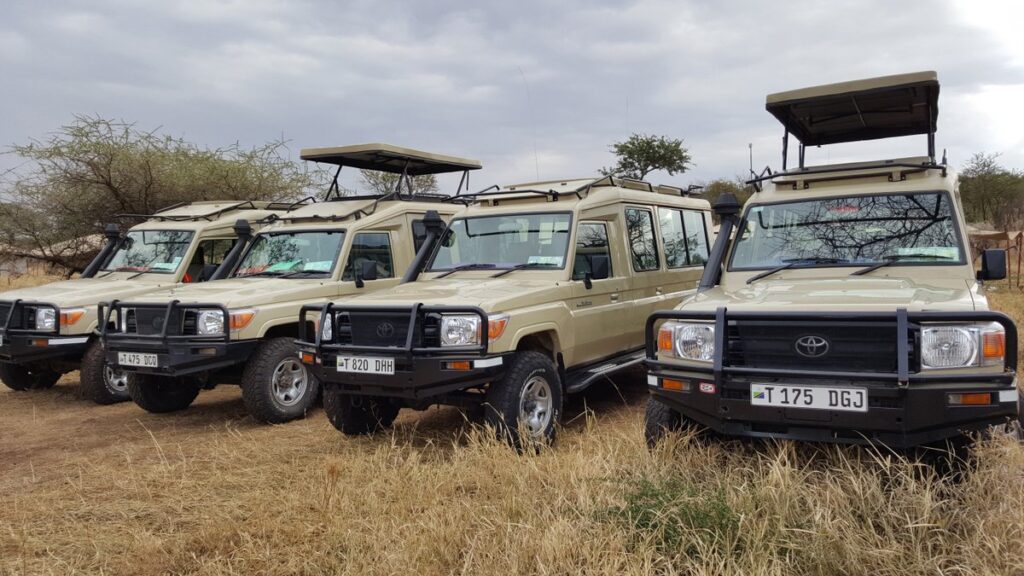
Once you land at Kilimanjaro, you have two ways to reach the Serengeti. The overland route a 6 to 8 hour drive from Arusha through Ngorongoro to the Serengeti’s Naabi Hill Gate is the standard option for budget and mid-range safaris and passes through genuinely beautiful highland scenery. It is long, but it is part of the journey.
The second option is a charter flight from Arusha Airport (ARK) to one of the Serengeti’s internal airstrips Seronera, Kogatende, Grumeti, or Lobo depending on your itinerary zone. A bush flight costs approximately $200 to $400 per person one-way and saves an entire day of driving, depositing you directly into the heart of the park within 45 minutes of takeoff. Most mid-range and luxury itineraries include at least one internal flight, and if yours doesn’t, it’s worth asking your operator to add one.
One important note: international flights into Kilimanjaro frequently arrive late at night. Building in an overnight in Arusha before beginning your safari the following morning is not just sensible — it sets you up to arrive at camp rested and ready, rather than exhausted from 24 hours of travel.
Safari Package Costs
Safari pricing in the Serengeti broadly follows three tiers, and the honest truth is that the wildlife itself does not change between them only the comfort, exclusivity, and depth of experience around it.
At the budget and camping level roughly $150 to $300 per person per day you’re looking at shared game drives, basic tented camps or public campsites, and communal facilities. For adventurous travelers who prioritize hours in the field over lodge amenities, this tier delivers outstanding value. The guiding quality can vary more significantly at this price point, which is why choosing an operator carefully matters even more.
The mid-range tier, running from approximately $300 to $600 per person per day, represents the sweet spot for most first-time US visitors. Comfortable en-suite tented camps, excellent food, knowledgeable guides, and smaller group sizes in game drive vehicles combine to create a deeply satisfying experience. This is where most Safari Stride travelers find the right balance between quality and value.
Luxury and ultra-luxury safaris start at around $600 per person per day and climb well beyond $2,000 at the top end. What you gain is significant: private camps in exclusive concessions outside the national park boundary (where night drives and walking safaris are permitted), private guides assigned solely to your group, fly-in itineraries that follow the migration as it moves, and a level of service and remoteness that turns a great safari into something genuinely transformative. If this is truly a once-in-a-lifetime trip and your budget allows, the difference is real.
Full Cost Estimate: 7-Day Serengeti Safari from the USA
| Expense | Estimated Cost (Per Person) |
|---|---|
| Round-trip flights (USA to JRO) | $1,200 – $1,800 |
| Safari package (accommodation, meals, game drives, park fees) | $2,800 – $4,500 |
| Tanzania eVisa | $100 |
| Travel insurance with evacuation cover | $150 – $300 |
| Vaccinations & health prep | $100 – $300 |
| Guide & camp staff gratuities | $150 – $300 |
| Personal spending & extras | $100 – $300 |
| Total per person | ~$4,600 – $7,600 |
Luxury itineraries will exceed this range, sometimes substantially. Budget camping safaris can come in meaningfully lower. But this window accurately reflects what a well-planned, high-quality first safari from the United States actually costs.
On saving money without compromising experience: traveling in shoulder season June or November brings lodge rates down noticeably while still offering excellent wildlife. Booking international flights as early as possible, particularly for peak-season travel, protects both your price and your seat availability. Combining multiple parks into a bundled circuit itinerary rather than booking each individually consistently delivers better operator pricing.
And if you’re genuinely open to basic facilities, a reputable camping safari often provides guiding quality equal to lodges at a fraction of the cost.
Tanzania Visa Requirements for US Citizens
As of January 30, 2025, Tanzania has formally eliminated visa-on-arrival for all travelers. Every visitor — including US citizens — must obtain an eVisa before departure. There are no exceptions, and attempting to sort this on arrival is no longer a viable option. US passport holders apply for a Multiple Entry Visa through Tanzania’s official immigration portal at visa.immigration.go.tz. The cost is $100 USD, valid for one year from the date of issue. This is a specific designation for Americans most other nationalities pay $50 for a single-entry visa. The multiple-entry format is actually useful for travelers combining Tanzania with Kenya or other neighboring countries on the same trip.
The application process involves completing the online form, uploading your passport photo and a copy of your passport bio page, submitting proof of your return or onward travel, and paying by credit card. Processing takes at least 10 business days under normal circumstances, so applying four to six weeks before departure gives you comfortable buffer. Do not leave this for the last minute — a delayed visa approval can derail an entire trip.
One critical and commonly overlooked detail: immigration officers at Kilimanjaro Airport will ask to see a printed, physical copy of your eVisa approval letter. A phone screenshot is not accepted. A digital PDF on a laptop is not accepted. Print the document and keep it in your carry-on alongside your passport.
Beyond the visa, US travelers entering Tanzania should ensure their passport is valid for at least six months beyond their arrival date. A Yellow Fever vaccination certificate is required if you are arriving from or transiting through a country on the Yellow Fever risk list check the current CDC and Tanzania Immigration guidelines before travel, as this list can change. Immigration officers occasionally ask for proof of sufficient funds for your stay, though this is not always checked.
Choosing a Safari Operator for the Serengeti
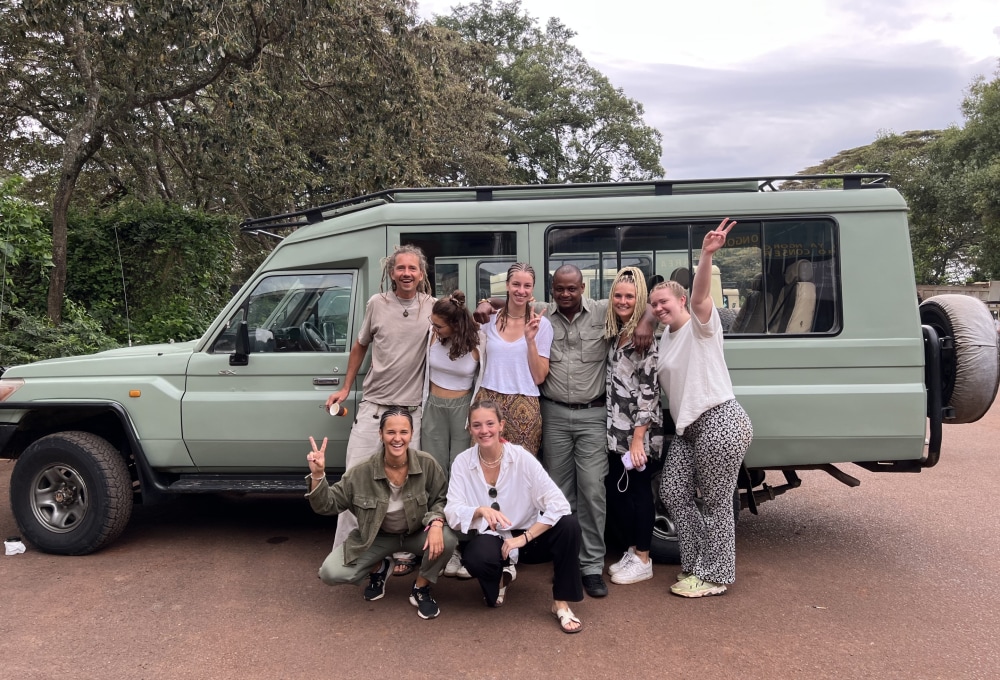
Of all the decisions you’ll make in planning a Serengeti safari, choosing your operator is the most consequential. Your operator determines the quality of your guide, the suitability of your accommodation, the strategy behind your game drives, and ultimately whether this becomes an extraordinary trip or a frustrating one. The difference between a great operator and a mediocre one is not subtle it shows up in every interaction from the first email to the last morning game drive.
The first thing to verify is licensing. Any legitimate Tanzania safari operator holds a valid license from the Tanzania Tourist Board (TTB) and is ideally a registered member of TATO the Tanzania Association of Tour Operators. These aren’t bureaucratic formalities; they’re the minimum baseline for accountability. Ask for the license number before you book. Reputable operators offer it without hesitation.
Local expertise is what separates truly great operators from adequate ones. An operator with genuine roots in Tanzania — guides who grew up near the parks, long-standing relationships with camp managers, and a deep practical knowledge of seasonal migration patterns brings insights that no international booking platform can replicate.
The best guides know where the cheetah was yesterday, which river crossing the wildebeest are approaching, and which thicket the leopard has been using to cache her kills. That kind of knowledge is built over years of field time, and it is worth paying for.
Your guide is the most important person on your safari. Ask specifically about the guide who will be assigned to your trip not just whether guides are “experienced,” but who your guide is, what their training background is, how many years they have worked in the Serengeti specifically, and whether they hold a formal naturalist certification. A great guide turns good game drives into unforgettable ones. A mediocre guide turns remarkable wildlife into a passive experience.
Pricing transparency is another reliable indicator of operator quality. A genuine all-inclusive Serengeti safari package covers park entrance fees, accommodation, all meals, game drives, and ground transfers. Tanzania’s Serengeti park fees alone can add $70 to $80 per person per day, and budget operators sometimes bury these costs in the fine print or exclude them entirely from headline prices. If a quote looks unusually low, ask specifically what it excludes. The full cost will surface eventually better before you book than after you’ve paid a deposit.
Finally, ask whether the operator can build an itinerary around your specific interests. A first-timer hoping to witness the Mara River crossings has very different needs from a photography enthusiast who wants long afternoon light in the western corridor, or a birder who wants to combine the Serengeti with the Ngorongoro Highland forests. The best operators don’t sell fixed packages they listen first and design second.
Serengeti Safari Travel Tips for Americans
Choose Your Camp Zone Carefully
The Serengeti is nearly the size of Connecticut, and where you stay determines what you see. The central Seronera valley is the year-round wildlife hub the highest concentration of resident predators, the most lodges, and the best all-season guarantee of sightings, making it the natural choice for first-time visitors. The southern Serengeti and Ndutu Plains are the place to be from December through March, when the calving herds and their predators fill the open grasslands.
The western corridor comes alive from June through July with the Grumeti River crossings. And the northern Serengeti the remote Kogatende and Lamai areas is the place for the Mara River crossings from July through October. Getting this geography right, in alignment with your travel dates, is one of the most valuable things your operator can do for you.
Protect Yourself with the Right Travel Insurance
Travel insurance with comprehensive emergency medical evacuation coverage is non-negotiable for an African safari. A medical evacuation from a remote Serengeti camp helicopter to Arusha, then medevac flight to Nairobi or further can easily cost $50,000 or more.
No standard health insurance policy from the US will cover this. Choose a policy that specifically includes emergency evacuation and repatriation, trip cancellation and interruption, medical expenses abroad, and adventure activity coverage. This should be one of the first things you book after finalizing your safari package.
Prepare Your Health Before You Depart
Visit a travel medicine clinic at least four to six weeks before departure. Malaria prophylaxis is the most critical preparation consult your doctor about which antimalarial is right for your specific itinerary and health profile, as options differ in side effects, dosing schedule, and cost. A Yellow Fever certificate is required if you transit through or arrive from a risk country.
Hepatitis A and B and Typhoid vaccinations are strongly recommended, and you should confirm your routine vaccinations tetanus and MMR in particular — are current. The Serengeti sits at moderate altitude (roughly 920 to 1,850 meters), which moderates but does not eliminate malaria risk. Don’t skip this step.
Pack Smart for the Field
The Serengeti is a dusty, wild, sun-drenched environment, and what you bring into the field directly affects your comfort. Wear neutral earth tones khaki, olive, beige, tanboth for camouflage when approaching wildlife and because anything white or bright picks up every grain of red Serengeti dust within minutes.
Early morning game drives can be surprisingly cold even in the dry season, so pack a fleece and a light windproof layer, and expect to peel them off as the sun climbs. A wide-brimmed hat and SPF 50+ sunscreen are non-negotiable in the open safari vehicle.
A quality pair of binoculars 8×42 or 10×42 will transform your wildlife viewing more than any other single piece of equipment. The ability to identify animals at distance, read behavior before you’re close, and follow a hunt in progress is something no camera lens provides in real time. Bring a camera with a telephoto zoom if photography matters to you, but don’t let gear anxiety dominate your preparation. The Serengeti rewards presence over perfection.
One practical note on luggage: if your itinerary includes any internal charter flights — which it should — pack in a soft-sided duffel or duffel-style bag under 15 kilograms. Hard-shell suitcases cannot be loaded onto bush aircraft and will be held at the operator’s Arusha office while you’re in the field.
Understand Tipping in Tanzania
Tipping is a genuinely meaningful part of the economy for safari guides and camp staff, and Americans — accustomed to the culture tend to do it well. As a general guide, your safari guide deserves $15 to $25 USD per person per day, a figure that reflects both the skill and the profound impact a great guide has on your experience.
Camp and lodge staff typically receive $5 to $10 per person per day, often pooled and distributed by the camp manager. For camping safari cooks, $5 to $10 per person per day is appropriate. Bring a supply of US dollars in small denominations tips are universally paid in cash USD throughout the Northern Circuit, and $1, $5, $10, and $20 bills are the most practical denominations to carry.
What to Expect on a Serengeti Safari
You’ve landed. You’ve driven out of Arusha as the road turns to red dust and the skyline gives way to open savannah and acacia trees silhouetted against a copper horizon. Your guide pulls the 4WD to a stop on a ridge, cuts the engine, and says quietly: “Look left.”
Thirty meters away, a cheetah is crouched in the grass, motionless, eyes locked on a Thomson’s gazelle that hasn’t registered the threat yet. The tension in the air is tangible. Nobody in the vehicle breathes.
This is what you came for. And it is exactly as extraordinary as you imagined.
Game drives run in two windows: the early morning, beginning at or just after sunrise when the air is cool, the light is golden, and predators are actively hunting; and the late afternoon, when the light turns amber and long, and the park exhales into the quiet of approaching dusk. These are the hours that earn their place in your memory for the rest of your life. Midday is rest back at camp for lunch, a proper afternoon nap, or simply sitting on your canvas deck watching a herd of buffalo drift across the floodplain below.
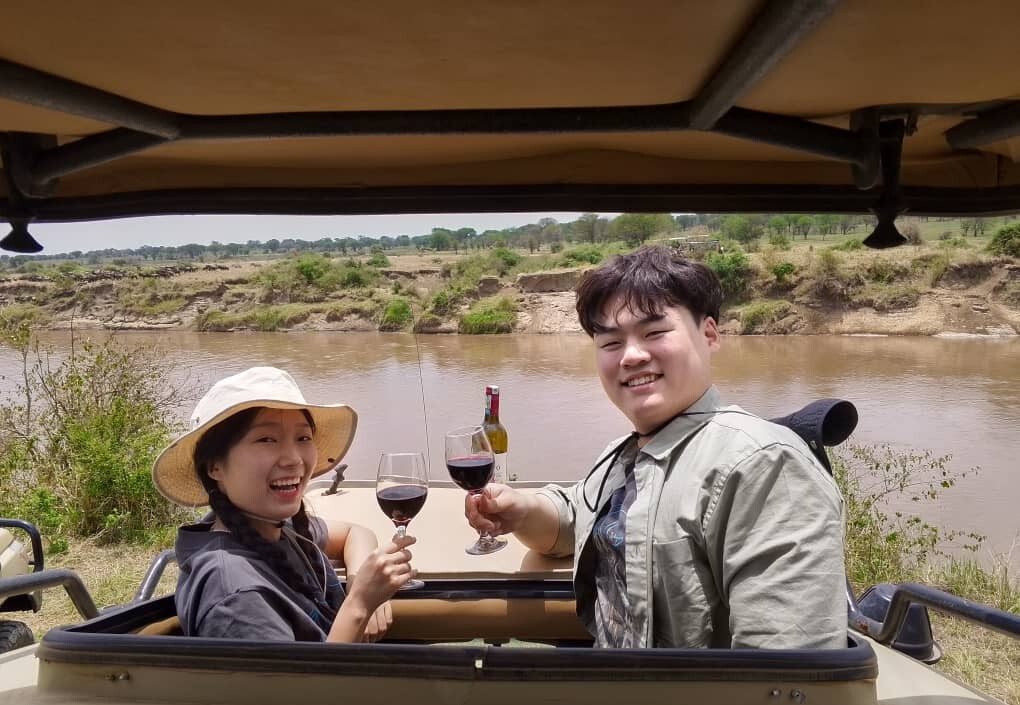
The quality of camp life surprises most first-time safari travelers. Food is almost always better than expected, often significantly so. Reputable tented camps and lodges serve fresh, well-prepared meals, and dinner under a canvas roof with wine, candlelight, and the sound of hyenas calling across the dark is an experience in itself.
The camps are designed to make you feel genuinely embedded in the landscape not sealed off from it and the effect is one of a sustained, immersive intimacy with the wilderness that no hotel can replicate.
Your guide’s role extends far beyond operating the vehicle. The best Serengeti guides are naturalists, trackers, and storytellers whose knowledge of the park runs decades deep. They read animal behavior at distances where most people see only shapes.
They identify birds by call, track lion movements by the direction of vultures, and explain the ecological relationships playing out around you in a way that transforms what might otherwise be passive observation into genuine understanding. They become, for most travelers, one of the most memorable people they have ever met on any trip anywhere in the world.
And throughout all of it through the great herds and the quiet empty plains, the thunderstorm building over the kopjes and the silence of a midday rest hour the Serengeti carries a quality that is almost impossible to describe to someone who hasn’t been there. It is a feeling of scale and wildness and time. Of being somewhere that existed long before you arrived and will continue long after you leave. Of having stepped, briefly, into something larger than yourself.
That is what you are going for. And it will deliver.
Frequently Asked Questions
How much does a Serengeti safari from the USA cost in total?
A realistic all-in budget for a 7-night mid-range Serengeti safari from the USA — including international flights, accommodation, park fees, visa, travel insurance, and gratuities — runs approximately $4,600 to $7,600 per person. Luxury itineraries run considerably higher; budget camping safaris come in lower.
What is the best time to visit the Serengeti from the USA?
For the iconic Mara River wildebeest crossings, July through September is peak season. For calving season and extraordinary predator activity, January through March delivers some of the finest wildlife viewing of the year. For value and fewer crowds, April to May and November are genuinely underrated. Each season offers something distinct and spectacular.
Do US citizens need a visa for Tanzania?
Yes. US citizens must apply for a Multiple Entry eVisa online at visa.immigration.go.tz before departure. The fee is $100 USD. Tanzania eliminated visa-on-arrival in January 2025. Allow at least 10 business days for processing and carry a printed hard copy of your approval letter for immigration.
Which airport should I fly into for a Serengeti safari?
Kilimanjaro International Airport (JRO), located near Arusha, is the correct gateway for all Northern Circuit safaris including the Serengeti, Ngorongoro Crater, and Tarangire. Dar es Salaam adds a full extra day of travel and is best suited for Zanzibar or southern Tanzania parks.
Are there direct flights from the USA to Tanzania?
No direct flights currently operate. The most common routing options are Ethiopian Airlines through Addis Ababa, Kenya Airways through Nairobi, KLM through Amsterdam, Qatar Airways through Doha, and Emirates through Dubai. Total travel time from the US typically runs 18 to 24 hours.
How long should I spend in the Serengeti?
A minimum of four full days in the park is strongly recommended. Most first-time US visitors plan 7 to 10 days total, combining the Serengeti with the Ngorongoro Crater and Tarangire National Park for a complete Northern Circuit experience that showcases the full range of Tanzania’s wildlife.
Is the Serengeti safe for American travelers?
The Serengeti National Park itself has a strong and consistent safety record. Your licensed guide and camp staff are trained in all aspects of wildlife safety, and incidents involving guests on organized safaris are exceptionally rare.
Comprehensive travel insurance including emergency medical evacuation is essential. Check the current US State Department travel advisory for Tanzania before your departure.
Book Your Serengeti Safari with Safari Stride
At Safari Stride, we don’t sell packages. We build experiences — designed around who you are, when you want to go, what moves you, and what you want to feel when you step back onto home soil and start telling the story of what you witnessed.
We work exclusively with licensed, TATO-member Tanzanian operators and field guides who have spent their careers in these parks. We stay deliberately small so that every client gets genuine personal attention not a booking form and a confirmation email, but a real conversation about what matters to you and an itinerary crafted to deliver it.
We know which camp in the northern Serengeti puts you closest to the Mara crossings in August. We know which guide follows the cheetah coalition in the central plains. We know when to book, how to save, and where the extraordinary moments are hiding.
Contact Safari Stride today for a free, personalized Serengeti consultation. Tell us when you want to go, what you’ve been dreaming about, and what this trip means to you. We’ll take it from there.
The Serengeti is calling. Let’s answer it together.