Arusha National Park is one of Tanzania’s most scenic and diverse protected areas, offering an exceptional safari experience within easy reach of both Arusha City and Kilimanjaro International Airport. Although it is often overshadowed by famous destinations such as Serengeti National Park and Ngorongoro Crater, this hidden gem rewards visitors with breathtaking landscapes, rich biodiversity, and a variety of activities rarely found in a single national park. From the towering slopes of Mount Meru and the lush montane forests to the sparkling Momella Lakes and the dramatic Ngurdoto Crater, every corner of the park reveals a different side of Tanzania’s natural beauty.
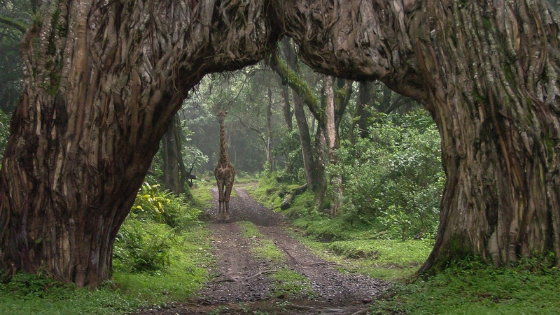
Unlike traditional safari destinations that focus mainly on game drives, Arusha National Park offers unique experiences including guided walking safaris, canoe safaris, and the opportunity to climb Mount Meru, Tanzania’s second-highest mountain. Wildlife enthusiasts can encounter giraffes, buffaloes, zebras, waterbucks, hippos, black-and-white colobus monkeys, blue monkeys, and more than 400 bird species, making it a paradise for photographers and birdwatchers alike.
Table of Contents
Whether you’re looking for a memorable day trip, a peaceful introduction to Tanzania’s Northern Safari Circuit, or an adventurous outdoor escape, Arusha National Park combines spectacular scenery, abundant wildlife, and unforgettable experiences in a destination that deserves a place on every traveler’s itinerary.
A Small Park With an Outsized Reputation
Most travelers planning a Tanzania safari focus their attention on the Serengeti, Ngorongoro Crater, and Tarangire, and it’s easy to see why: those parks deliver the density and drama that safari brochures are built around. Arusha National Park, by comparison, is often treated as an afterthought, a quick stop near the airport rather than a destination in its own right.
That reputation undersells it. At just 552 square kilometers, Arusha National Park is one of the smallest parks on the Northern Circuit, but it packs in a range of landscapes and experiences that larger parks simply can’t offer, from rainforest and alpine terrain to crater lakes and one of the only places in Tanzania where visitors can safely walk among wildlife on foot.
Located roughly 45 minutes from Arusha town and about 50 kilometers from Kilimanjaro International Airport, the park sits close enough to the region’s main travel hub to work as a half-day excursion, yet it’s varied enough to reward a full day or even an overnight stay. For travelers who assume a short visit means a lesser experience, Arusha National Park tends to be one of the more pleasant surprises of a northern Tanzania itinerary.
The Shadow of Mount Meru
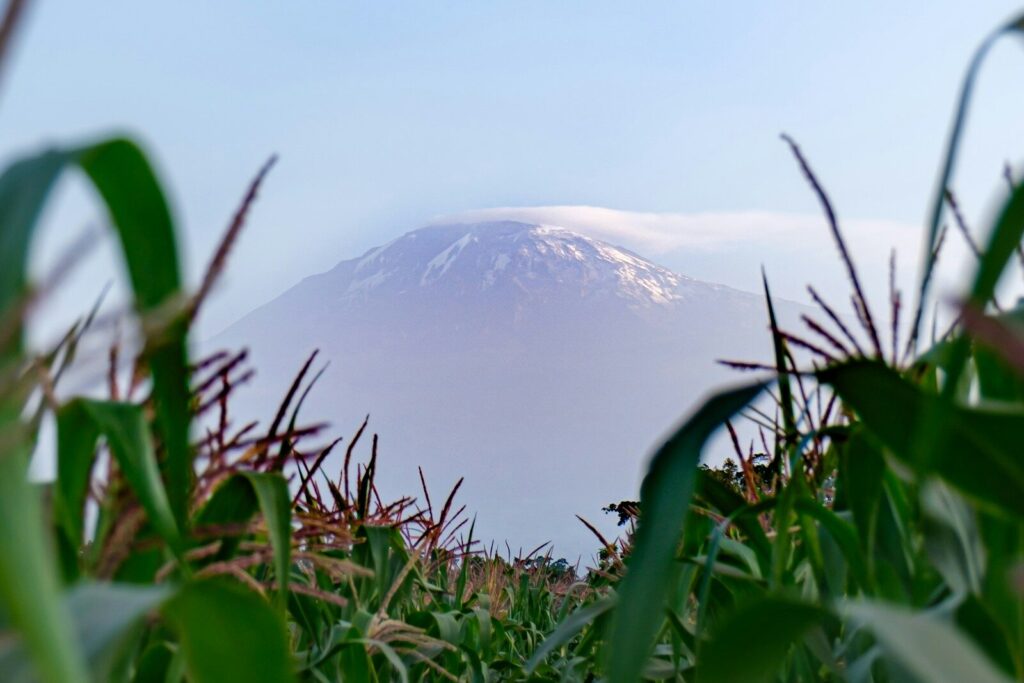
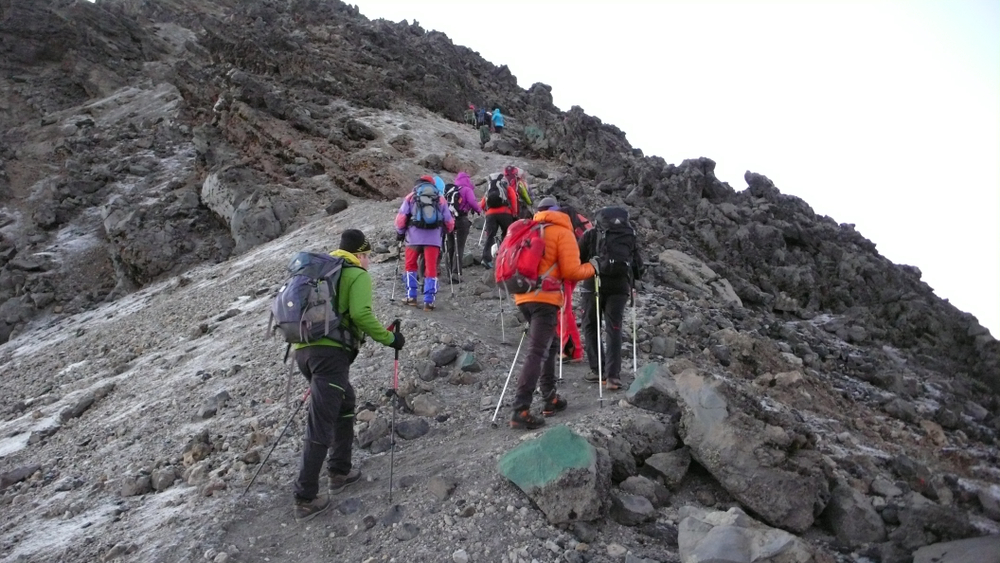
Everything about Arusha National Park is shaped by the mountain at its center. Mount Meru rises to 4,565 meters, making it the second-highest peak in Tanzania after Kilimanjaro, and its near-perfect volcanic cone dominates the skyline from almost anywhere in the park. Unlike Kilimanjaro, which draws thousands of climbers each year and requires a multi-day trek through increasingly barren terrain, Meru offers a quieter, less crowded alternative that still delivers a genuine mountaineering challenge. The ascent typically takes three to four days, and it takes hikers through a striking sequence of ecosystems, starting in lush montane forest, climbing through alpine meadows, and finishing on exposed rocky slopes near the summit.
Climbers on Meru often encounter wildlife along the lower slopes that most safari-goers never see from a vehicle, including buffalo, giraffe, and the park’s signature black-and-white colobus monkeys. Because the mountain is inside the national park, climbing permits and park entry fees are bundled together, and armed rangers accompany hikers for at least part of the route, both for safety and because the lower forest sections do hold potentially dangerous wildlife. Even travelers with no intention of summiting can appreciate Meru’s presence; its crater rim and cliffs are visible from large stretches of the park, and on a clear day, it’s even possible to see Kilimanjaro rising in the distance beyond it.
Ngurdoto Crater: A Miniature Ngorongoro
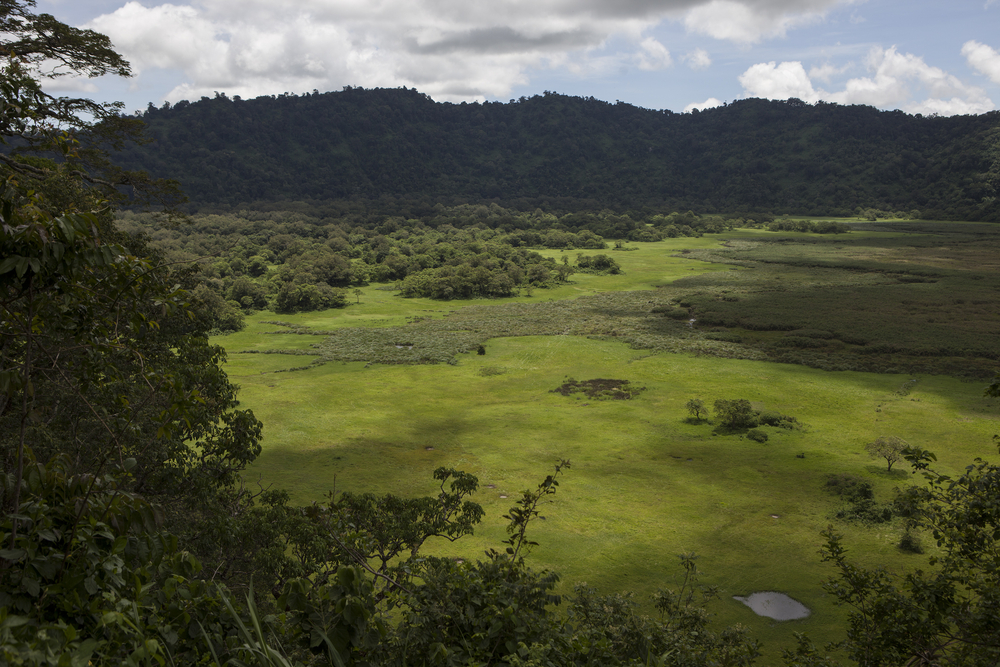
In the southern part of the park lies Ngurdoto Crater, a collapsed volcanic caldera that draws frequent comparisons to Ngorongoro Crater, albeit on a much smaller scale. The crater floor is a swamp, thick with reeds and dense vegetation, and while there’s no vehicle access down into it, the rim offers several designated viewpoints where visitors can look down and watch buffalo, warthogs, and other grazing animals moving through the marshland below. The setting has a slightly lost-world quality to it, closed in by forest and largely undisturbed by the kind of vehicle traffic that busier crater floors attract.
Ngurdoto works well as a mid-morning stop for travelers doing a game drive through the park, offering a change of pace from the open savanna sections and a good vantage point for photography, particularly given the crater’s consistently green, mist-touched backdrop.
Serengeti Ndogo and the Momella Lakes
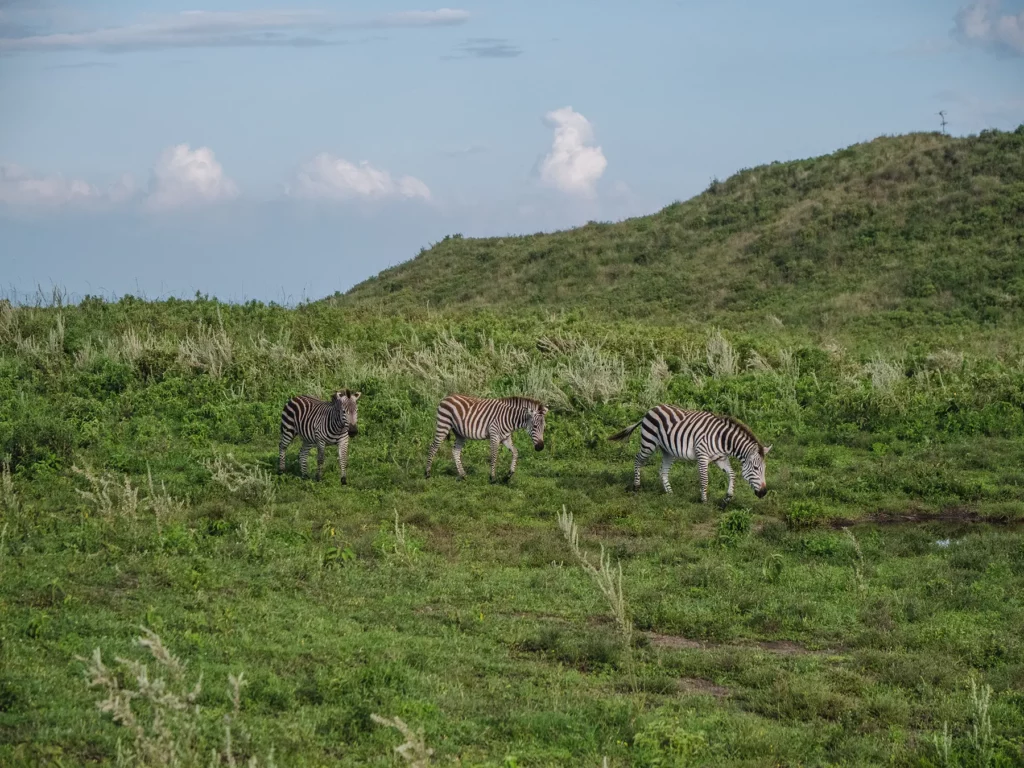
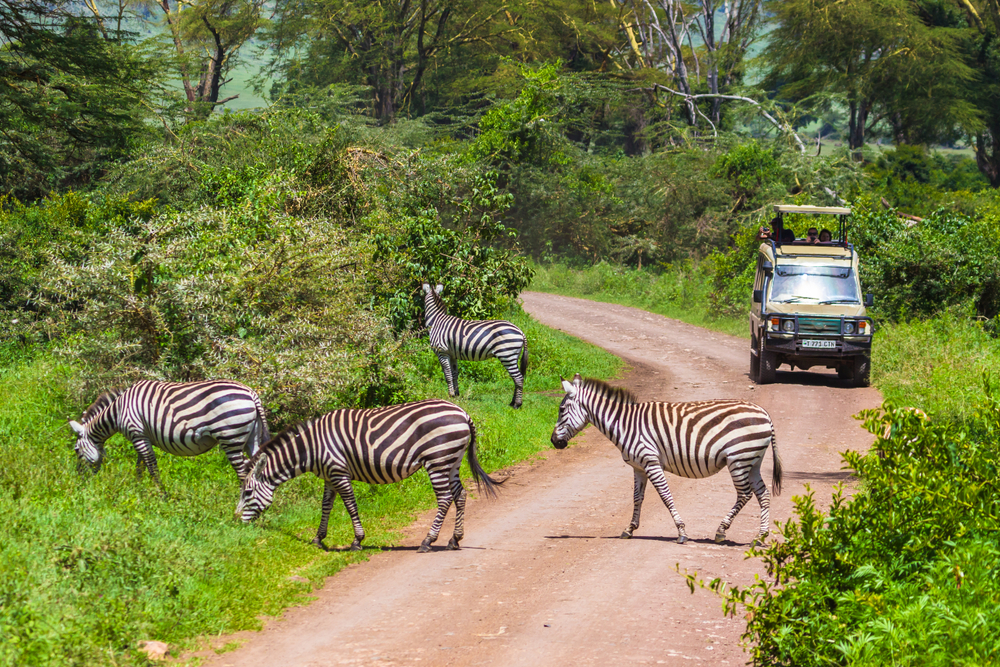
The northeastern section of the park is often nicknamed Serengeti Ndogo, meaning “Little Serengeti,” for its open grassland and the density of grazing animals it attracts. It’s here that visitors have the best chance of spotting large herds of zebra, buffalo, giraffe, and waterbuck moving across the plains, along with warthogs trotting through the grass in family groups. The landscape looks and feels different from the forested southern half of the park, and the contrast is part of what makes Arusha National Park worth exploring in full rather than treating as a quick photo stop.
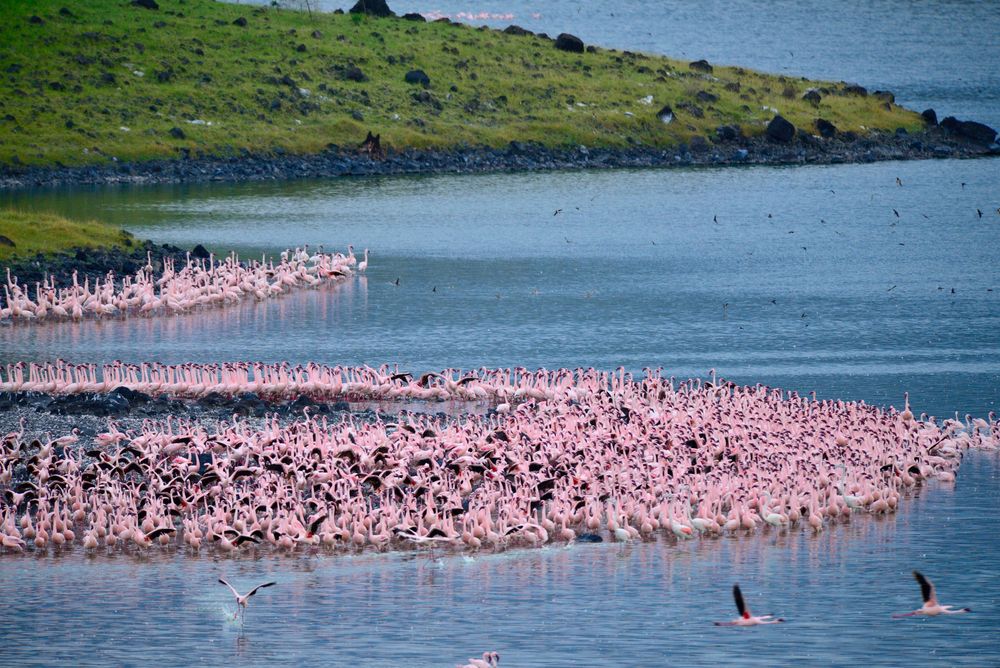
Just beyond Serengeti Ndogo sit the Momella Lakes, a chain of shallow, alkaline lakes fed by underground springs rather than a single river system, which gives each lake a slightly different mineral content and, as a result, a different color. The lakes are a major draw for birdlife, and depending on the season, visitors can find thousands of pink-hued flamingos gathered along the shallows, along with fish eagles, herons, and a wide range of other waterbirds. Hippos are common in and around the lakes as well, and the open terrain here makes them relatively easy to spot from a safe distance.
Walking and Canoe Safaris: Getting Closer to the Wildlife
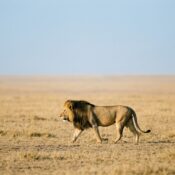
What genuinely sets Arusha National Park apart from most of its Northern Circuit neighbors is the range of activities available beyond the standard game drive. Because the park has no resident lion population, and only occasional leopard sightings, it’s considered safe enough to allow walking safaris accompanied by an armed ranger, something that’s off-limits in lion territory like the Serengeti. Walking through the forest on foot changes the entire character of a safari; instead of watching wildlife from inside a vehicle, visitors move at a slower pace, picking up on details like animal tracks, birdsong, and the movement of colobus monkeys overhead that would be easy to miss from a car window.
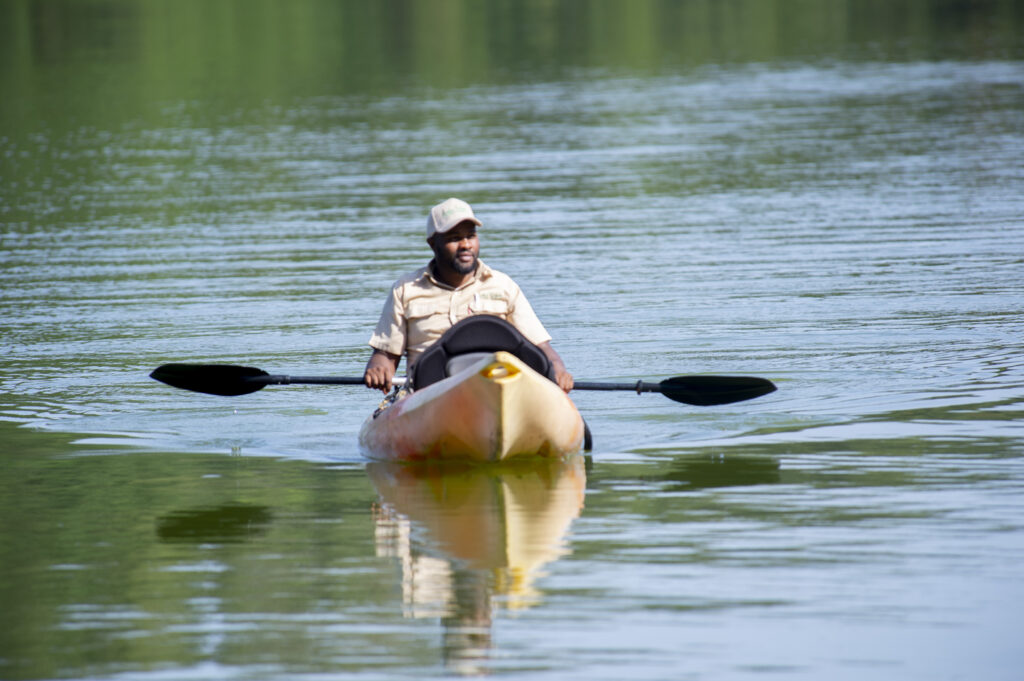
Canoe safaris on the Momella Lakes offer a similarly different vantage point. Gliding across calm water puts visitors at eye level with hippos, buffalo grazing along the shoreline, and the huge variety of birdlife the lakes attract, and it’s often cited by visitors as one of the more memorable experiences in the park precisely because it feels so different from a conventional drive. Between the walking safaris, canoeing, and the option to climb Mount Meru, Arusha National Park offers more variety in activity type than almost anywhere else on the Northern Circuit.
The Wildlife of Arusha National Park
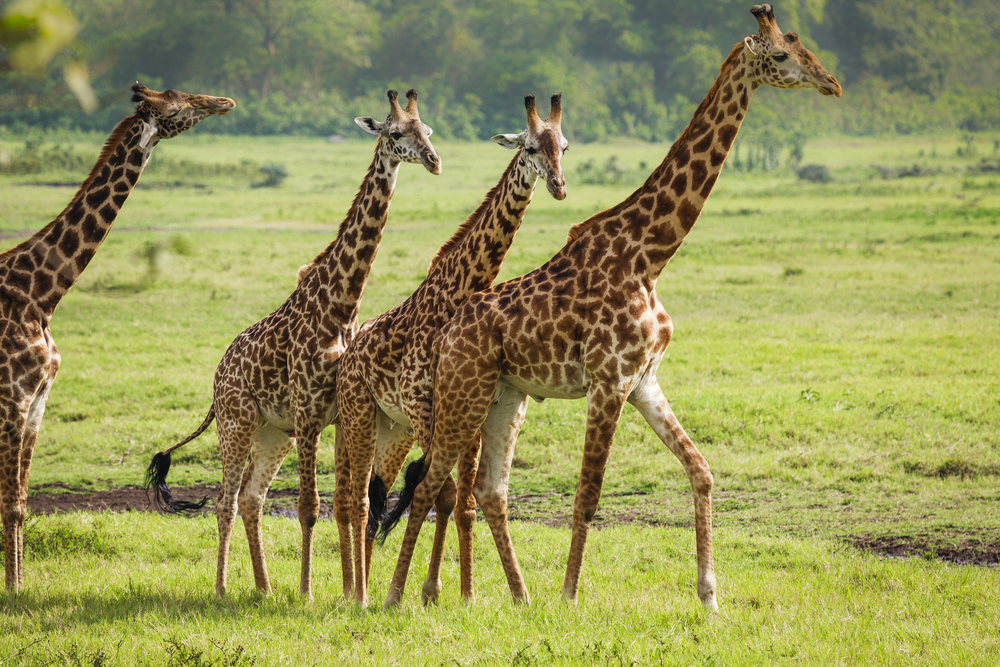
Visitors sometimes worry that a small park without lions or rhinos won’t deliver much of a wildlife experience, but that concern tends to fade quickly once they’re inside. Giraffes are consistently one of the most commonly spotted animals, often seen browsing along the tree line in open areas, and buffalo, a member of the Big Five, are present in solid numbers throughout the park’s grassland sections. Elephants pass through occasionally, particularly around the forested areas, while zebra, waterbuck, and warthog round out the more frequently seen grazing species.
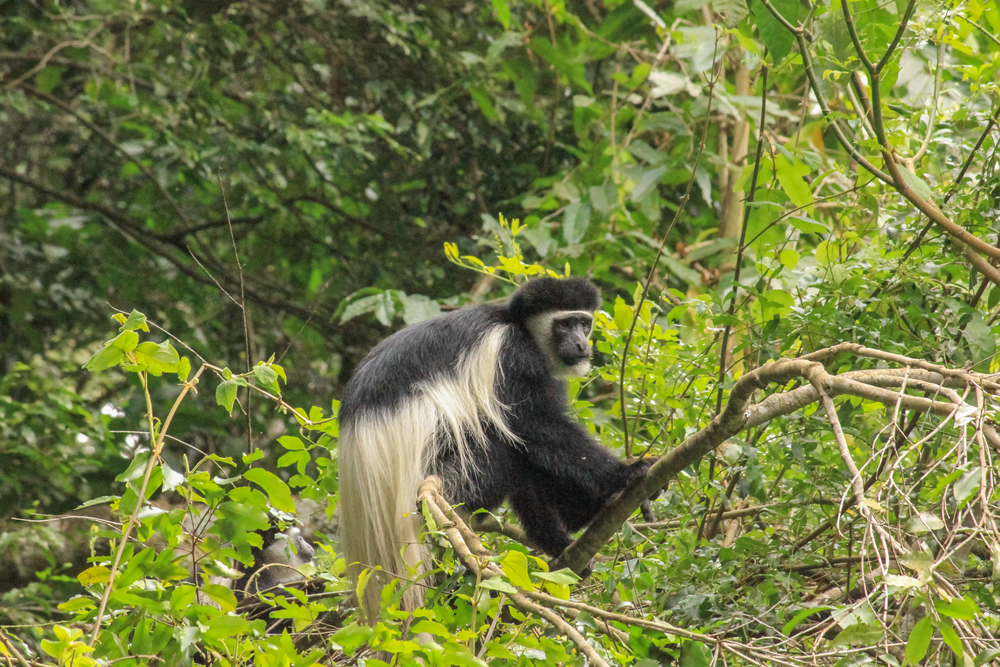
The park’s real specialty, though, is its forest-dwelling wildlife, much of which is difficult or impossible to see elsewhere on the Northern Circuit. Black-and-white colobus monkeys are the standout here, moving through the canopy with a kind of acrobatic ease that makes them a highlight for most visitors, and Arusha remains one of the only places in northern Tanzania where they can be reliably spotted.
Blue monkeys, bushbuck, and smaller antelope species like Harvey’s red duiker and suni also inhabit the primary forest, rewarding visitors who spend time walking or driving slowly through the wooded sections rather than rushing toward the open plains. Leopard and spotted hyena are present but rarely seen, and lucky visitors occasionally spot a serval or African wild cat moving through the undergrowth.
When to Visit to Arusha National Park
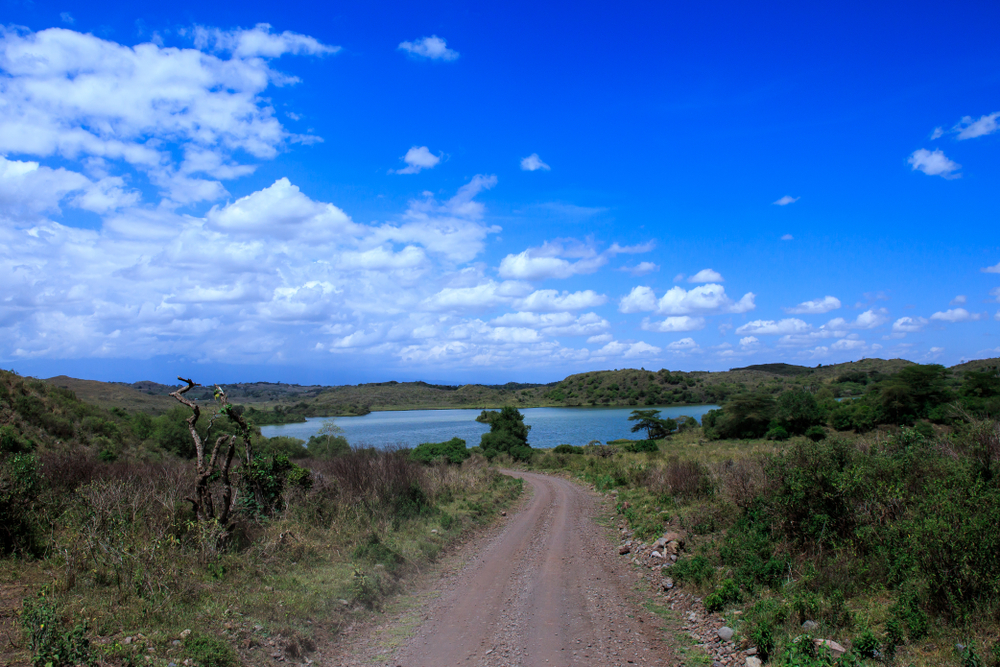
Arusha National Park can be visited comfortably throughout the year, which is part of what makes it such a convenient addition to a broader itinerary. That said, the dry season, running roughly from June through October, tends to offer the best wildlife viewing, since thinner vegetation and predictable water sources around the lakes make animals easier to spot. The rainy season brings its own rewards, particularly lush scenery and dramatic waterfalls, though April in particular can bring heavy rain that makes some roads difficult to navigate and may limit certain activities.
How Arusha National Park Fits Into a Northern Circuit Itinerary
Given its proximity to Arusha town and Kilimanjaro International Airport, the park is most commonly visited as either a day trip from Arusha or as the opening or closing stop on a longer safari itinerary. Travelers flying into Kilimanjaro and staying at a lodge near Arusha, such as a property on the outskirts of town, often build in a half or full day at Arusha National Park before heading further afield to Tarangire, the Serengeti, or Ngorongoro Crater. Because the park requires relatively little driving time to reach and explore, it fits neatly into a schedule without eating into the days set aside for the more wildlife-dense parks further west.
For travelers who want a lower-key introduction to the safari experience, or a final outdoor activity before flying home, Arusha National Park also works well as a standalone half-day excursion, offering a genuine sense of Tanzania’s landscape and wildlife diversity without requiring the longer drives or higher costs associated with the more remote parks.
Cost to Visit Arusha National Park
The cost of visiting Arusha National Park depends on several factors, including your nationality, the type of safari you choose, the season, and whether you visit independently or with a tour operator. Every visitor is required to pay Tanzania National Parks (TANAPA) entrance fees, while those entering with a vehicle will also incur vehicle entry charges.
If you plan to enjoy activities such as a guided walking safari, canoe safari on the Momella Lakes, or climbing Mount Meru, additional activity and guiding fees apply.
For most international visitors, a full-day guided safari from Arusha typically costs between US$250 and US$450 per person, depending on the group size, vehicle type, and services included. These packages usually cover park entrance fees, transport in a 4×4 safari vehicle, an experienced driver-guide, drinking water, and a picnic lunch. Private safaris generally cost more than shared group tours but offer greater flexibility and a more personalized experience.
Tanzanian citizens and East African residents benefit from significantly reduced park entrance fees, making Arusha National Park one of the most affordable wildlife destinations in the country. Travelers should also budget for optional expenses such as tips, accommodation before or after the safari, travel insurance, and personal purchases.
If you’re planning a Northern Circuit safari, combining Arusha National Park with destinations such as Tarangire National Park, Ngorongoro Crater, or Serengeti National Park can provide better value while showcasing Tanzania’s remarkable diversity of landscapes and wildlife. Booking through a reputable local tour operator also ensures that permits, transportation, and park logistics are handled efficiently, allowing you to focus on enjoying your safari experience.
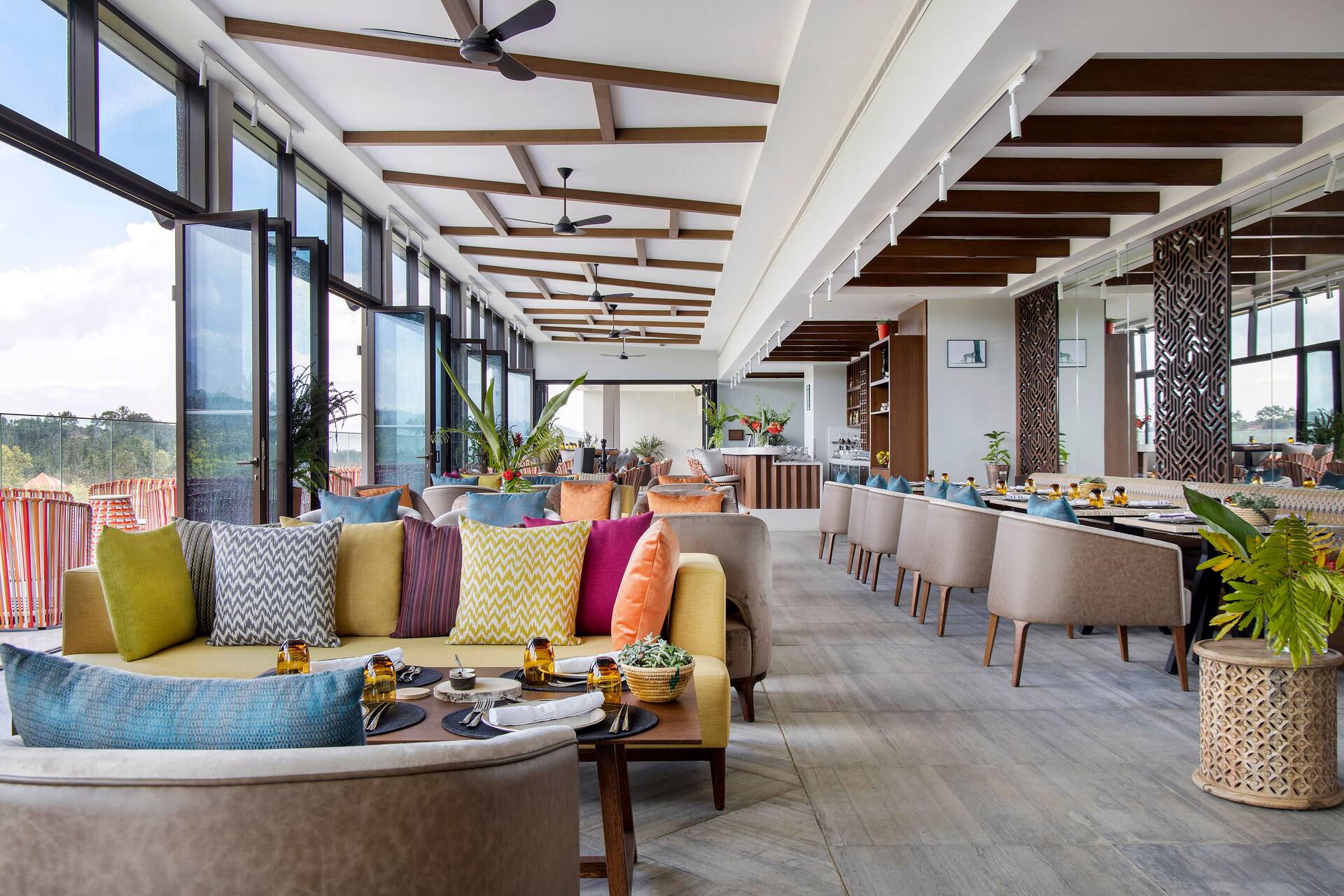
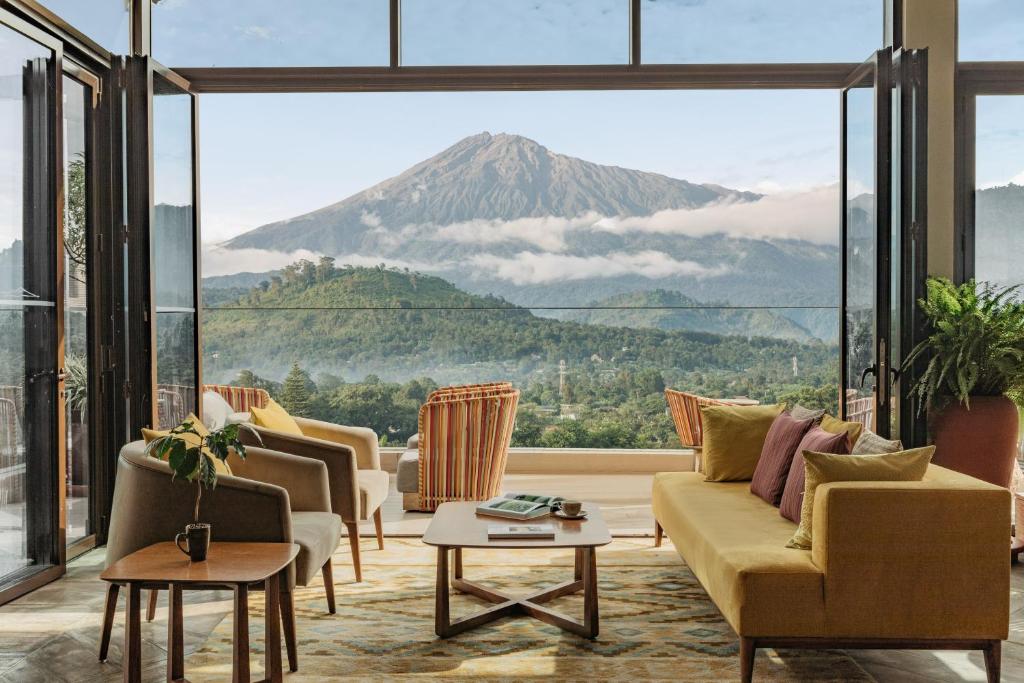
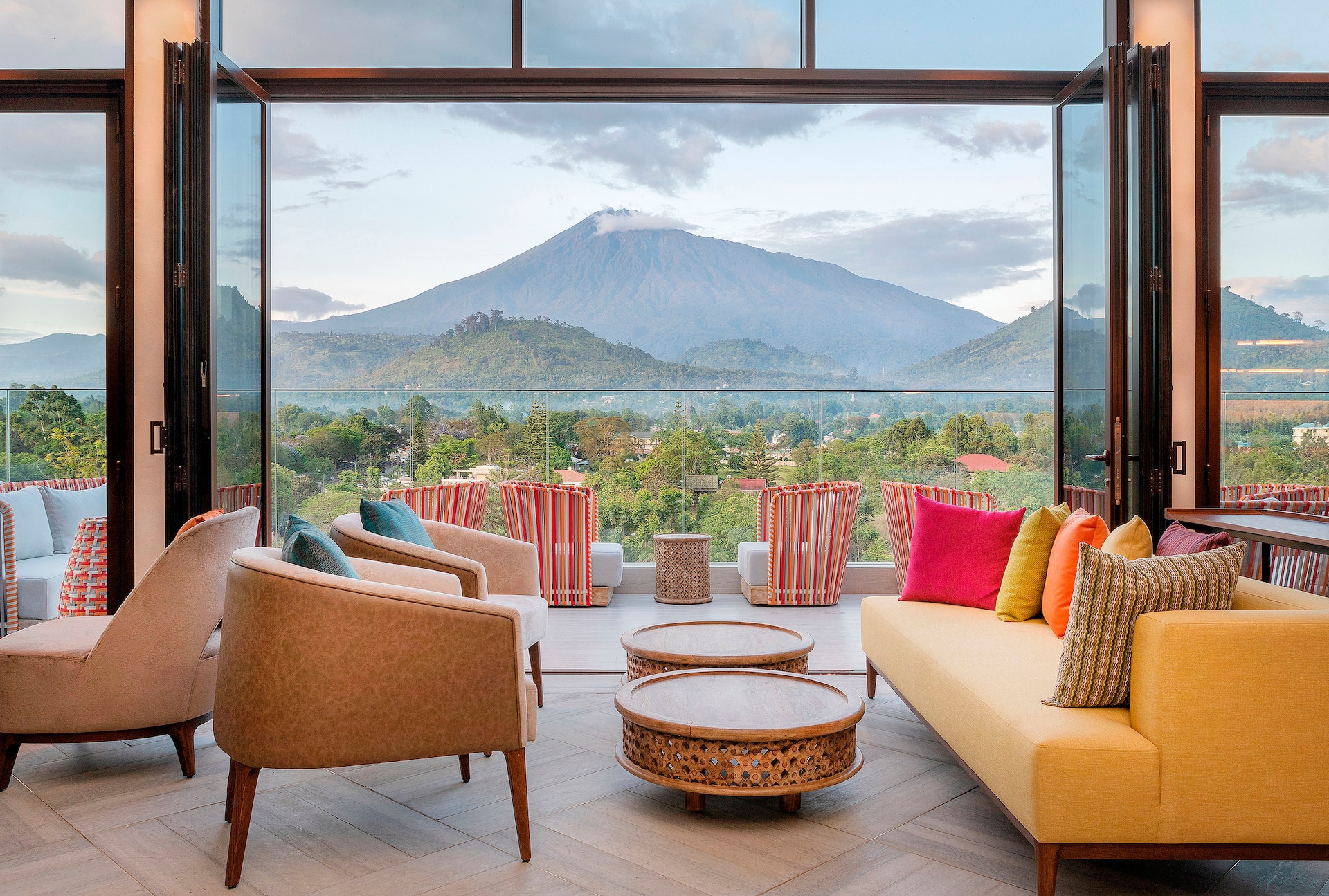
Where to Stay Near Arusha National Park
Because the park sits so close to Arusha town and Kilimanjaro International Airport, travelers have an unusually wide range of accommodation to choose from, spanning everything from safari lodges right on the park’s doorstep to city hotels and simple guesthouses. Where you base yourself largely comes down to whether you want to wake up surrounded by the coffee farms and forest of the immediate area, or prefer the convenience of staying in town with easy access to restaurants, shops, and Arusha’s other attractions.
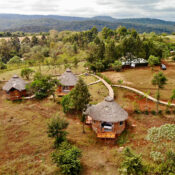
For travelers who want the full lodge experience without straying far from the park gates, a handful of properties sit just minutes away, including Hatari Lodge, a farmhouse-style property built on the grounds of the old ranch that inspired the classic film Hatari!, and Ngurdoto Mountain Lodge, a larger resort-style property near the park’s southern entrance.
On the northern side of the park, Rivertrees Country Inn and several coffee-farm lodges offer a similar setting, with gardens, forest views, and a slower pace than anything you’d find in the city center. A stay at one of these properties works particularly well if Arusha National Park is the main focus of your day, since it cuts out the drive time from town and lets you start a walking safari or Mount Meru trek at first light.
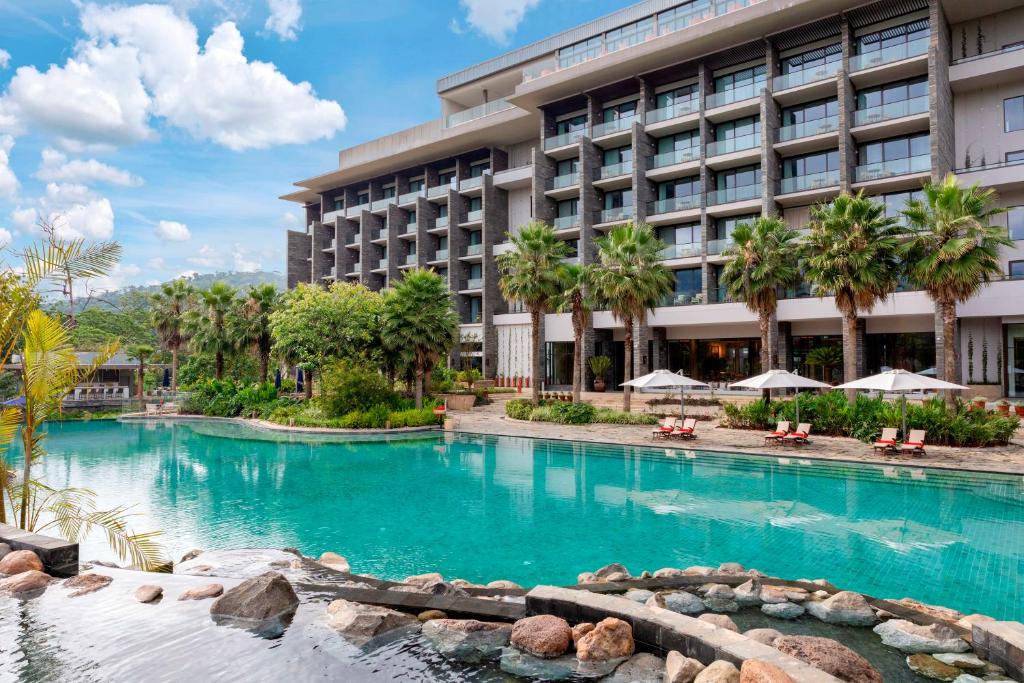
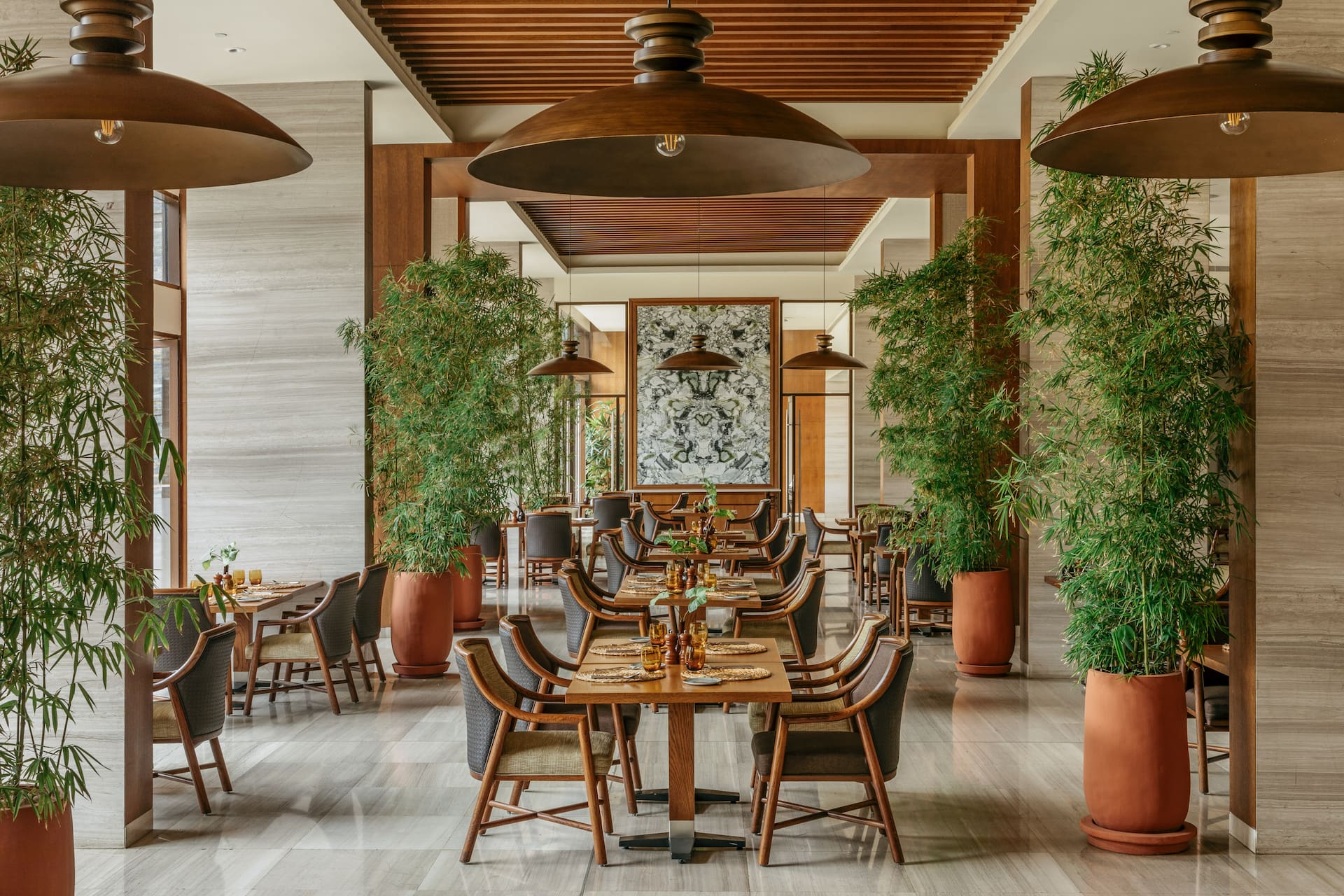
Closer to Arusha town itself, options broaden considerably. Coffee estate lodges on the outskirts of the city, such as those set among working coffee farms near Lake Duluti, combine easy access to both the park and the airport with a genuinely restful, garden-set atmosphere. These tend to suit travelers using Arusha as a stopover before or after a longer Northern Circuit safari, since they offer full lodge comforts, including pools, spas, and proper dining, without committing to a location right at the park boundary.
Arusha town itself has a full range of hotels, from international-standard properties to comfortable mid-range guesthouses, and this is generally the most convenient base for travelers who want to combine a visit to the park with time exploring the city, arranging gear for a Kilimanjaro or Meru climb, or simply staying somewhere with more restaurant and shopping options within walking distance.
Budget-conscious travelers and backpackers will also find a reasonable selection of hostels and guesthouses in and around Arusha, offering private rooms or dorm-style accommodation at a fraction of the cost of a lodge stay, which can be a sensible option if the park is only a short add-on to a longer trip rather than the main event.
At Safari Stride, we typically recommend basing yourself at a lodge near Lake Duluti or on the edge of Arusha town if you’re combining the park with a broader Northern Circuit itinerary, since it keeps you close to both Kilimanjaro Airport and the road north toward Tarangire, the Serengeti, and Ngorongoro. For travelers making Arusha National Park the centerpiece of a shorter trip, or heading straight into a Mount Meru climb, staying right at the park’s edge cuts down on transfer time and lets you make the most of early morning wildlife activity. We’re happy to match you with the right property based on your itinerary and budget when you book with us.
Frequently Asked Questions
How far is Arusha National Park from Arusha town?
The park is about 45 minutes by road from Arusha town, and roughly 50 kilometers from Kilimanjaro International Airport.
Can you see the Big Five in Arusha National Park?
Not the full Big Five. The park has buffalo and occasional elephant sightings, but lions and rhinos are absent, and leopards are rarely seen.
Is Mount Meru worth climbing compared to Kilimanjaro?
Mount Meru offers a shorter, less crowded, and generally less expensive climb than Kilimanjaro, typically taking three to four days, and it still delivers dramatic scenery and a genuine mountaineering challenge.
What makes Arusha National Park different from other Northern Circuit parks?
Its combination of walking safaris, canoe safaris, forest wildlife like colobus monkeys, and a mountain climb all within a single small park makes it more varied in activity type than most of its larger neighbors.